Global Refugee Statement – Global Refugee Forum Progress Review 2025
15 December 2025
Global Refugee Statement – Global Refugee Forum Progress Review 2025
Excellencies, colleagues, and fellow refugees,
Around the world, families are running out of places to go. The scale of global displacement remains extraordinarily high, with 117.3 million people forced to flee, not because they chose to move, but because staying meant persecution, violence, or the collapse of their basic rights and safety. Behind every statistic is a person who once had a home, a community, and a future rooted in the ordinary rhythms of life. This reality reminds us that the systems designed to protect people in times of crisis are under severe strain.
Forcibly displaced and stateless people are navigating overlapping emergencies: conflicts that show no sign of resolution, peace processes that stall, and protracted crises that hold entire generations in limbo. Host countries — most of them low- and middle-income states — continue to show remarkable generosity, even as global support remains uneven and unpredictable. Ten countries alone hosted more than half of the world’s refugees in 2024. These pressures demand a renewed commitment to the principles that underpin the international protection system.
Yet throughout these challenges, refugees continue to rebuild their lives, contribute to economies, strengthen communities, and care for one another. But resilience alone cannot be the foundation of international policy. Refugees are not bystanders; we are actors, leaders, organizers, and experts in our own right.
Across the world, refugee-led organizations are delivering solutions every day: from providing humanitarian assistance in Lebanon and Turkey, to supporting education in Uganda and Jordan, offering health and protection services in Ethiopia and Greece, advancing peacebuilding in Afghanistan and Nigeria, and filling critical gaps from camps in Cox’s Bazar, to urban neighborhoods in Nairobi and Bogotá. They respond first and stay longest. They also bring technical expertise grounded in lived experience to policy-making spaces.
For example, GARLOS, a network of refugee-led organizations across Latin America, has played a key role in shaping the Cartagena+40 process; and in East Africa, the Regional Refugee Engagement Forum to IGAD – a regional refugee representative body – is demonstrating progress in advancing refugee participation at regional decision and policy making processes through the IGAD Support Platform. Responses are far more effective when refugees are meaningfully engaged, and this is affirmed by the Global Compact on Refugees. The GCR’s pledging framework further upholds these principles, including the centrality of meaningful refugee participation.
Refugees across generations, genders, and identities are leading responses within their communities, but their leadership remains under-recognized and underfunded. Consultation without decision-making power is not meaningful participation. Tokenism wastes expertise. Excluding refugees from policy design undermines the effectiveness of the entire system. Localization efforts must shift power rather than responsibility, prioritizing quality funding for organizations led by displaced and stateless persons, and ensuring international organizations complement rather than overshadow this leadership. If we want better and more effective outcomes, refugees must be partners, not afterthoughts.
Inclusion must also reflect the diversity of refugee experiences. Women and girls face heightened risks of violence and exclusion. LGBTQI+ refugees confront discrimination and insecurity. Refugees with disabilities struggle to access services and information. Youth face barriers that limit their leadership and economic opportunities. Economic inclusion and the right to work, especially for women and young people, must be part of any credible protection system. Policies that ignore these realities deepen inequality; protection must respond to the needs of all refugees, not only those that are most visible and easy to access. The global funding crisis is magnifying these inequalities as essential services shrink, and meaningfully including forcibly displaced people in these decisions helps ensure that resource allocation aligns with the needs and priorities of affected communities.
Durable solutions also remain central to any credible refugee response. But for many, they remain more theoretical than real. Voluntary return is possible only when conditions allow for safety and dignity. Local integration requires consistent policies and long-term support for both refugees and host communities. Resettlement, once a powerful expression of global solidarity, remains far below global needs. In the first half of 2025, only 28,700 refugees were able to access resettlement or sponsorship pathways across 18 countries — almost three times fewer than in the same period in 2024. Expanding safe pathways, strengthening conditions for sustainable return, and enabling genuine inclusion in countries of asylum must be approached with realism, rights, and refugee agency at the center.
Climate change is compounding displacement, intensifying fragility, and placing additional pressure on communities already living through crisis. Strengthening the HDP nexus— linking humanitarian, development, and peacebuilding efforts—and supporting frontline states ensures responses are more inclusive, sustainable, and shaped by the needs of those most affected.
At the heart of our collective responsibility lies the protection regime itself. The right to seek asylum is under growing pressure, and deterrence-based approaches continue to spread. These practices do not reduce displacement; they increase suffering and weaken the global framework that has safeguarded millions. Upholding the 1951 Refugee Convention and the principle of non-refoulement must remain non-negotiable. A credible protection system requires fair asylum procedures, access to rights, and humane reception conditions. Millions of refugees and stateless people still lack documentation and legal identity, without which rights, safety, and solutions remain out of reach.
This Global Refugee Forum Progress Review also marks the final global gathering under the leadership of High Commissioner Filippo Grandi. Over the past decade, his tenure has helped elevate meaningful refugee participation within global discussions, including through institutionalizing the UNHCR Advisory Board to the Task Team on Engagement and Partnership with Organizations led by Displaced and Stateless Persons. This progress must not only be preserved but deepened, ensuring more spaces to influence policy and programming are accessible to refugee experts and recognizing them as key contributors for more effective solutions.
The next High Commissioner must defend the Refugee Convention unequivocally, confront policies that erode protection norms, and champion meaningful refugee participation at all levels of UNHCR’s governance and at regional and country policy levels. They must work with States to uphold international law, resist externalization practices, and ensure that protection is never treated as negotiable.
The world has made many promises. What is needed now is measurable action, sustained investment, and political courage. Refugees do not seek affirmation; we seek follow-through, transparency, and accountability.
What we ask is simple: match our courage with action, our expertise with partnership, and our commitment with accountability. The future of international protection depends on what the world chooses now: retreat or responsibility, symbolism or substance, managed decline or collective renewal.
The system must choose justice.
Recommended
Sept. 22, 2025
Upholding Not Undermining International Law Civil Society Open Letter to States
In advance of this week’s UN General Assembly High-level meeting, speeches by Heads of State and Government and reported efforts to enlist UN Member States in an attempt to undo international legal protections for refugees, 271 civil society organisations released an open letter to UN Member States calling on them to uphold, preserve, strengthen, and celebrate international refugee, human rights, and humanitarian treaties—and to reject efforts to undo or undermine legal norms.
July 21, 2025
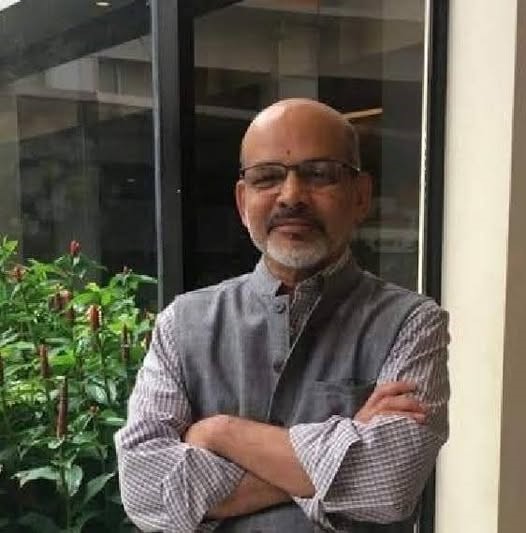
APRRN deeply saddened by the loss of Ravi Hemadri
For over 25 years, Ravi dedicated his life to community mobilisation, training, advocacy, and research. Our community of practitioners and advocates working on the rights of refugees and other vulnerable people on the move in Asia Pacific has lost a friend and colleague. But his legacy will continue to inspire those who worked with him. Our heartfelt condolences go out to his family and loved ones.
May 22, 2025
APRRN Urgent Appeal to the Government of Pakistan to Immediately Halt Forced Deportations of Afghan Refugees
The Asia Pacific Refugee Rights Network (APRRN) express our grave concern over the ongoing forced deportations of Afghan refugees by the Government of Pakistan under the so-called “Illegal Foreigners Repatriation Plan.” In April 2025 alone, some 144,000 Afghans returned from Pakistan, including nearly 30,000 who were deported.